Türkiye's Retrofit Market After the Code Change
A stricter seismic code, a legal route for declaring buildings risky, and a construction sector with spare capacity: how the Turkish retrofit market actually works.

Ask a Turkish contractor what changed in the last decade and the answer is rarely a material or a method. It is paperwork. The technical content of a retrofit — assessment, jacketing, wraps, foundation work — has been understood for thirty years. What reshaped the market was a regulatory layer that made the condition of an existing building a legal, financial and insurable fact rather than a private opinion.
For anyone selling into that market, or trying to understand why a strengthening scheme that looks obvious is not being built, the regulatory structure explains most of the behaviour.
Three layers that govern the work
The seismic code. The 2018 edition of the Turkish building earthquake code introduced performance-based design as a mainstream requirement, with defined performance levels and a design-basis earthquake tied to the site. For new buildings, this raised the analysis effort. For existing buildings, it created the reference against which a retrofit is judged: the assessment has to demonstrate a performance target, not just an absence of visible damage.
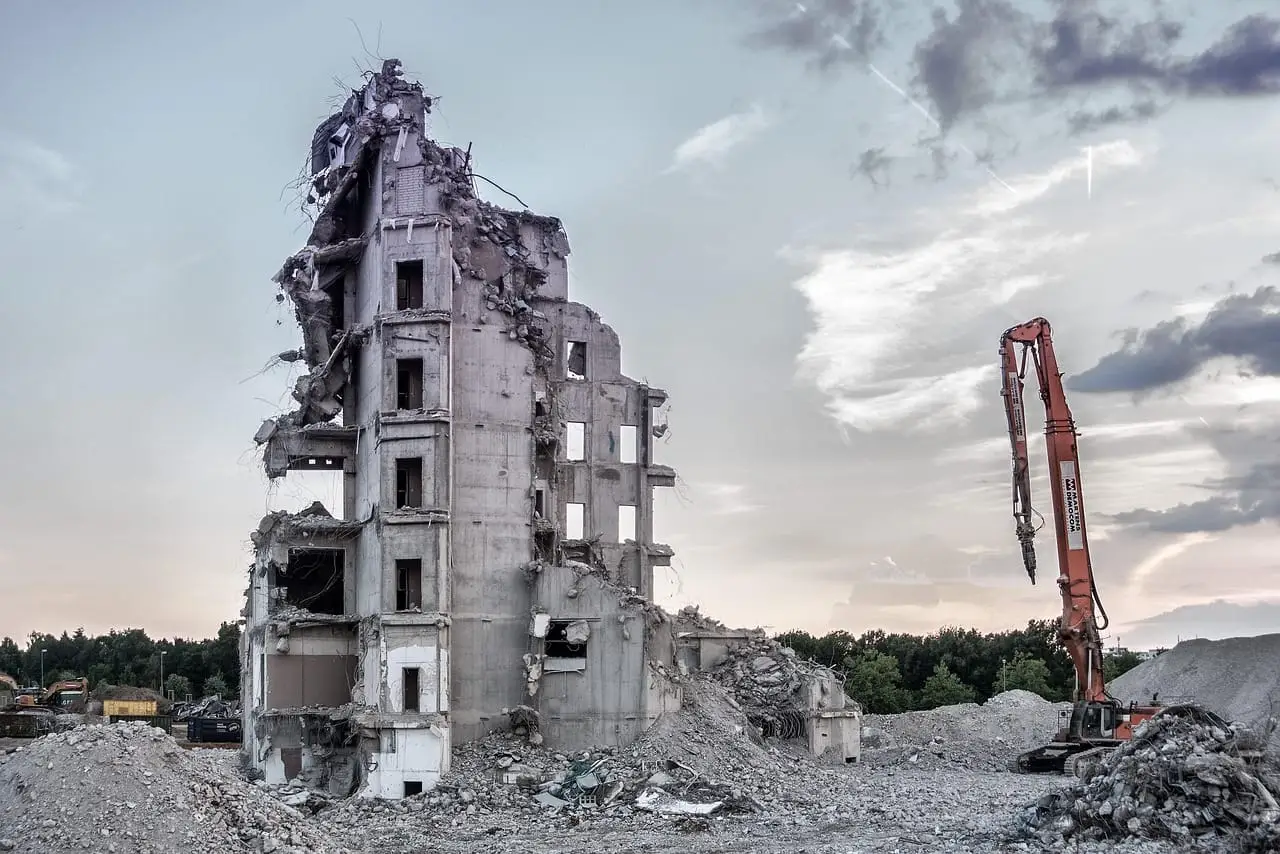
The risky-building route. Legislation introduced after 2012 allows a building to be formally designated as risky, on the basis of an engineering assessment carried out by a licensed firm. That designation unlocks a legal process — evacuation, demolition, reconstruction with incentives — which is a very different product from a strengthening scheme. Once a building is declared risky, the economics almost always favour demolition and rebuilding, because the designation transfers the site into a development process with finance attached.
Municipal and licensing controls. Retrofit and urban transformation work is carried out by firms holding the relevant authorisations, with inspection obligations and liability attached to the designer and the applicator. This is where quality varies most: a licensed process does not guarantee a well-detailed jacket, and the inspection regime is only as good as the inspector’s access to hold points.
The interaction between the first two layers is the single most important thing to understand about the market. If a building can plausibly be declared risky, strengthening is competing against a much larger financial instrument. If it cannot — because it is a heritage structure, a fully occupied commercial asset, a hospital, or a building where the owner cannot afford the downtime — then retrofit is the only route, and the technical quality of the scheme becomes the differentiator.
What demand looks like on the ground
Retrofit demand in Türkiye clusters in three segments:
- Public and institutional buildings — schools, hospitals, dormitories and administrative buildings, procured through public tender, with design and supervision separated. Technical specifications here are explicit and inspection is real, which makes them the reference market for products and systems.
- Occupied commercial and industrial assets — factories, warehouses, offices and hotels where the cost of downtime exceeds the cost of the strengthening. These projects are driven by insurance and by continuity of operations, and they reward contractors who can phase work around production.
- Residential buildings with organised ownership — apartment blocks where the decision requires a majority of owners, and where the retrofit competes directly with the demolition-and-rebuild route. These are slow, political, and often lost to the risky-building process.
The segments have almost nothing in common commercially. A supplier who has succeeded in public tender work often struggles in occupied industrial assets, where access, dust, noise and night work dominate the specification.
Procurement decides the product
In public work, the specification is written by a designer and enforced by a supervisor, and the unit-rate system rewards compliance. A system that is expensive per square metre but documented, tested and approved has an advantage, because the alternative — a cheaper system with no test data — creates a risk the supervisor will not accept.
In private work, the decision is compressed. The owner wants a number, a duration and an assurance that the building will be usable afterwards. Specifications are frequently drafted around whatever system the contractor already knows, and technical differentiation collapses into price unless the contractor can articulate why one system fails earlier than another.
That difference explains a pattern visible across the market: the same product line sells at a premium in institutional work and at a discount in residential contracting, with the discount often justified by reduced testing, not reduced material.
Compliance, marking and the paper trail
Two documents matter more than any datasheet in this market. The first is the CE marking and the associated declaration of performance for construction products placed on the market, which sets out the declared properties and the test basis. The second is a European Technical Assessment or an equivalent national approval for systems that are not covered by a harmonised standard — which is the normal situation for proprietary FRP strengthening and injection systems.
A buyer’s real question is not “does it have a certificate” but “does the certificate cover the property I am relying on”. A CE mark for a repair mortar that declares compressive strength but not bond strength is not evidence of bond. An ETA for a CFRP system that was tested on a particular primer and saturant combination does not transfer to a substituted resin.
Where the market is weak, it is here: substitution of system components during procurement, with the design based on one manufacturer’s tested assembly and the site receiving an untested mixture of parts. That is a specification-writing problem dressed as a commercial one.
Insurance and the economics of being right
Compulsory earthquake insurance for residential buildings covers the structure against seismic damage and has shaped the conversation between owners and engineers more than any code clause. It gives a building a financial identity that can be compared against the cost of intervention, and it makes the post-retrofit state something an owner can insure rather than simply hope about.
For commercial assets, the calculation is more direct. A strengthening scheme is justified by avoided downtime, avoided insurance loading and the ability to keep a tenant. Where those three are absent — vacant buildings, marginal rents, uncertain tenure — retrofit rarely happens regardless of engineering merit.
The result is a market that is technically sophisticated and commercially uneven. Turkish engineers design and build competent jacketing and FRP schemes; the constraint is usually whether the owner has a reason to spend money on the building rather than on the site underneath it.
What this means for anyone selling in
Three practical conclusions:
- Know which route the building is on. If it can be declared risky, you are not competing with another strengthening system; you are competing with demolition finance, and the argument has to be about continuity, heritage, occupancy or time.
- Bring documentation, not adjectives. Test reports for the specific assembly, pull-off criteria, cure data at the temperatures actually expected on site, and fire performance with the protective system named.
- Price the process, not the material. The winning contractors in this market are the ones who can sequence work around occupants, hold inspection points and produce the file. Material cost is a small part of a retrofit budget; competence is the scarce input.
Keep reading
Related notes from the same sections of the desk.
Repair or Replace? The Numbers Owners Actually Ask For
Strengthening is rarely chosen on engineering merit alone. Five comparisons that decide the argument, from downtime and embodied carbon to residual life.
Seismic Retrofit Sequencing for 1990s Reinforced Concrete Frames
Jackets, wraps and new shear walls solve different problems. Getting the order wrong can load a strengthened column with the demand you just removed from its neighbour.

Glass, Carbon or Aramid: A Selection Matrix for FRP Strengthening
Three fibres, three cost points, three failure profiles. A practical comparison of modulus, elongation, durability and cost for structural strengthening.