Carbon Fibre Strengthening: Nine Details That Decide Whether the Laminates Work
The design calculation is rarely what fails on a CFRP strengthening job. These are the nine execution details that separate a working retrofit from a decorative one.
Technically reviewed by Dr. Ayşe Demir, structural engineering.
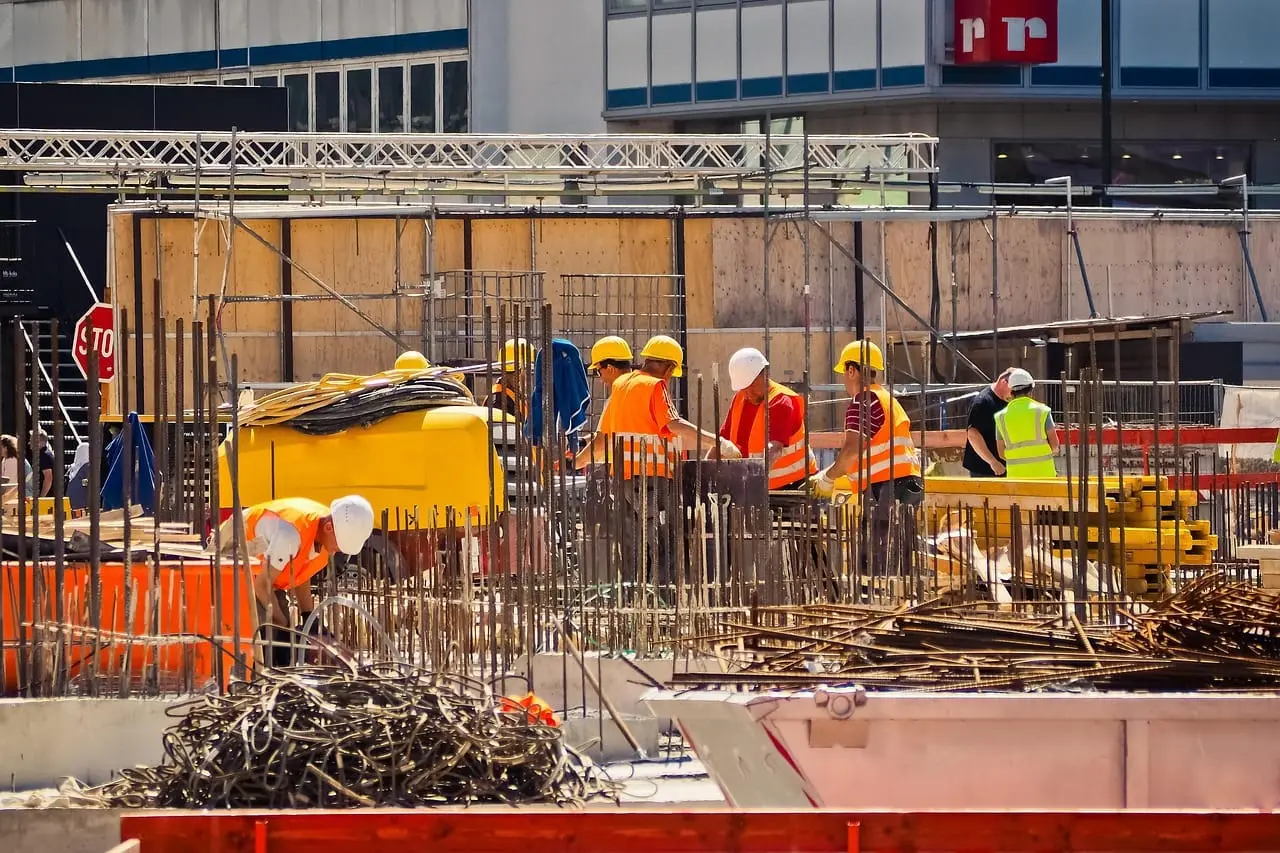
Carbon fibre reinforced polymer has been sold for thirty years as the answer to every deficient member. In practice, the material is the easy part. The calculation is routine — a strain limit, an environmental reduction factor, a check that the existing steel can carry the load before the composite is engaged. What fails on site, and what shows up in the forensic photographs after an earthquake, is almost never the arithmetic.
It is the corner that was left square. The primer that was applied at 4 °C. The lap splice that landed under a soffit because that is where the roll ran out. Below are the nine details that decide the outcome of a wet-layup strengthening job, in the order in which they tend to go wrong.
1. The substrate is not concrete until you have removed everything that is not
A pull-off test that fails at the plaster tells you nothing about the concrete. Surface preparation for externally bonded FRP is not the same specification as for a render: the substrate must be sound, roughened to a profile of roughly CSP 3 to CSP 5, and free of dust, laitance, curing compounds, oil and old coatings. Grinding is the default; bush-hammering is acceptable if the resulting surface is levelled. Where the cover is carbonated or friable, it has to come off until you reach material that will hold the load.
The governing number is tensile strength. ACI 440.2R sets a minimum substrate tensile strength for FRP application — commonly quoted as 0.34 MPa (50 psi) from a pull-off test — and many specifiers raise it to 1.0 MPa or more on heavily deteriorated structures. Test the substrate you are actually going to bond to, not the one in the report written before the render was removed.
2. Corners must be rounded before anything is wrapped
A laminate wrapped around a square column corner concentrates stress on a line rather than a curve. The fibre either tears locally or debonds as the resin cures and shrinks. Round the arris to a radius of at least 13 mm for a single layer, and 20 mm or more where several layers are wrapped; chamfer the edge with a grinder, fill with a shrink-compensated repair mortar, and check the radius with a template rather than by eye. On beams where the wrap terminates at a soffit, the end detail matters just as much: a U-wrap with mechanical anchorage at the termination is not optional decoration.
3. Primer and saturant have a window, and it is shorter than you think
Two-part epoxies have a pot life that falls sharply with temperature. A mix that gives 40 minutes at 25 °C gives perhaps 15 at 35 °C in direct sun. Primer applied to a hot, sun-facing slab can skin over before the saturant arrives, and a saturant that has begun to gel will not wet out dry fibre. The discipline is simple and rarely followed: small batches, shade, thermometer on the surface, and a hard rule that a mix which has started to exotherm is discarded, not stretched.
4. Dry fibre must be saturated, not merely coated
Wet layup depends on the resin reaching every filament. Roller pressure should be firm enough to drive resin through the ply and out at the edges; a laminate with white, dry patches is a laminate with no strength at those patches. Work from the centre outwards, and check the underside of the first ply (not just the top) before adding the second. Air voids between plies are the second most common cause of premature debonding after poor surface preparation.
5. Fibre orientation is a design decision, not a site preference
For shear strengthening, the fibres run perpendicular to the member axis — vertical wraps on a beam, closed hoops on a column. For flexure, they run along the span. For combined shear and torsion, a diagonal scheme at roughly 45° may be specified. The distinction is not cosmetic: a laminate applied in the wrong direction can double the material consumption and add nothing to capacity. Mark the orientation on the drawing, and mark the direction on the member before the first ply goes down.
6. Lap splices are where the load actually transfers
In wet layup systems, the overlap in the fibre direction is typically a minimum of 200 mm, but the number that matters is the manufacturer’s developed length for the specific system, and it must be staggered so that no two laps sit on the same line. Laps at a corner should wrap around it, not stop short. On a column, spiral the laps rather than stacking them — a straight vertical line of laps becomes a vertical crack path.
7. Anchor the ends or watch the ends peel
FRP carries tension well and compression badly. Where a flexural laminate terminates in a region of high moment gradient, the peel stresses at the cut end can exceed the bond capacity. ACI 440.2R handles this through the debonding strain limit, but that check assumes the end detail is as specified. U-wraps, transverse anchorage, or extension into a lower-moment zone are the three practical answers. Terminating a laminate in mid-span because that is where the roll ended is not one of them.
8. Cure temperature is a structural parameter
Ambient-cure epoxies need time above a minimum temperature to develop their glass transition temperature. The usual rule is that application and cure should stay above 5 °C and at least 3 °C above the dew point, with protection for the full cure period. Cold nights after a warm afternoon are the classic failure: the laminate looks fine, tests fine in a coin-tap survey, and has a Tg well below the service temperature of a dark-coloured soffit in July.
9. The fire case is not somebody else’s problem
Epoxy matrix composites soften as they approach Tg, and unprotected laminates in a fire can lose their contribution in minutes. Where the strengthened element is part of the fire resistance strategy, the composite needs a protective system — typically a proprietary insulation or a fire-rated board — designed for the required period. This is a design output, not a variation order after the wrap is finished.
The quality record
On a well-run job, the file that goes to the client contains: substrate pull-off results at a stated frequency, photographs of prepared and rounded corners, batch records with mix times and temperatures, ply counts and orientation per member, lap positions and lengths, cure temperature logs, and a final visual and tap survey. Without that file, the design calculation is a claim, not evidence.
The uncomfortable truth about FRP strengthening is that it is a craft trade wearing an engineering coat. The material will do what the calculation says — provided somebody on site treated the corner radius, the primer window and the lap stagger as seriously as the strain limit.
Keep reading
Related notes from the same sections of the desk.

Base Plates and Anchor Bolts: Where Strengthening Projects Actually Fail
A column can be perfectly jacketed and still fail at the four bolts holding it down. Anchor installation, hole cleaning and edge distance decide the outcome.
Seismic Retrofit Sequencing for 1990s Reinforced Concrete Frames
Jackets, wraps and new shear walls solve different problems. Getting the order wrong can load a strengthened column with the demand you just removed from its neighbour.

Glass, Carbon or Aramid: A Selection Matrix for FRP Strengthening
Three fibres, three cost points, three failure profiles. A practical comparison of modulus, elongation, durability and cost for structural strengthening.